Shenzhen, China / Mar 23, 2026
Conceived for Tenova Future, the Róng Museum of Art will be focused on visual culture of the 20th and 21st century. The new institution asserts a civic responsibility of big company towards culture and urban life in China’s capital of innovation.
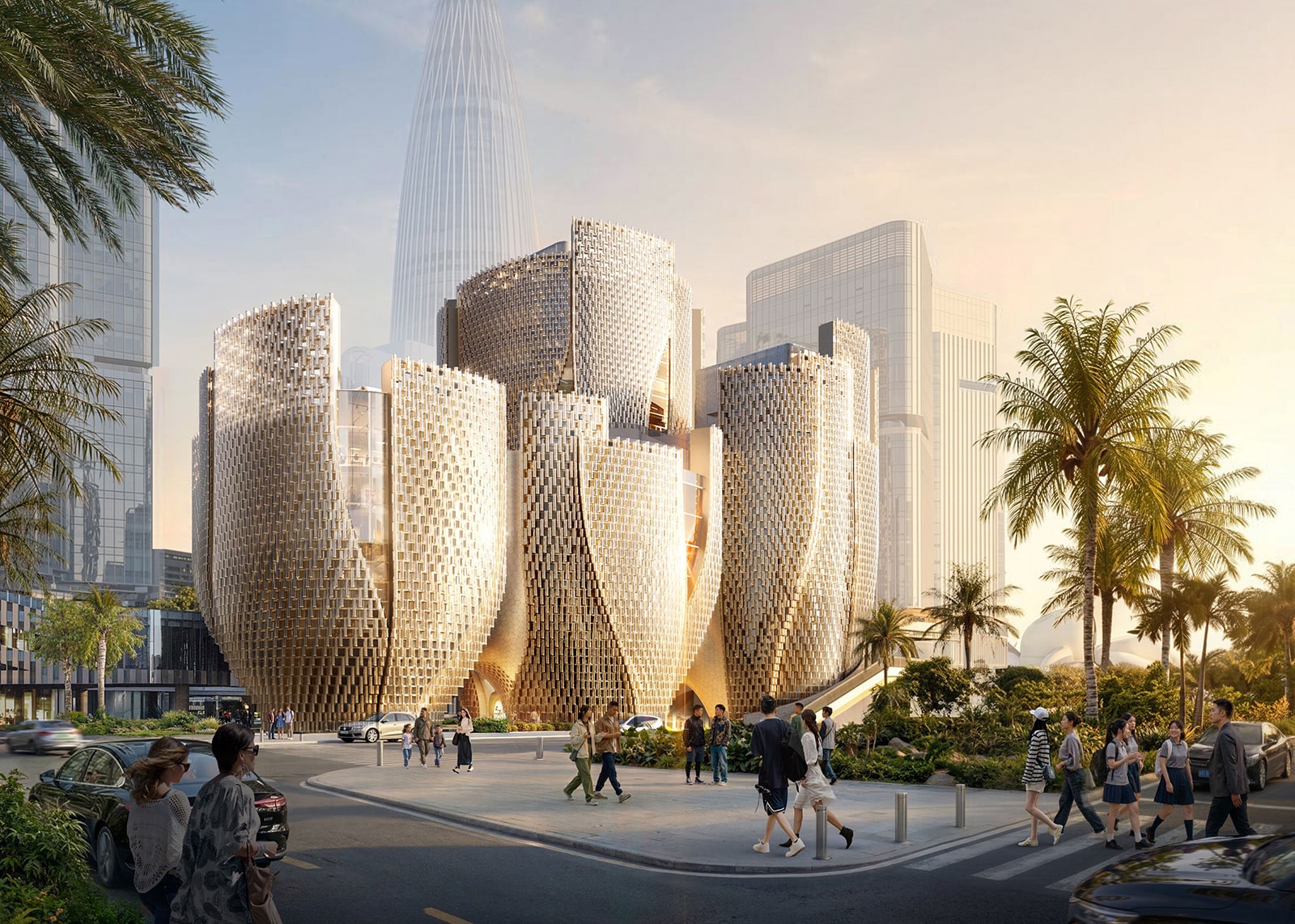
Ole Scheeren’s design for Róng Museum of Art creates a symbiotic space in Shenzhen’s Nanshan District dedicated to visual and digital culture of the 20th and 21st century, including art, design, architecture and film. The museum forms the cornerstone of the Houhai Hybrid Campus – also designed by Ole Scheeren – which integrates residences, offices, curated specialty retail, and a House Hotel operated by Swire Properties into a 24‑hour urban ecosystem.
Technology and Culture
Named after the Chinese character for “symbiosis” and “integration,” the Róng Museum of Art marks a significant milestone in how Shenzhen’s tech‑driven economy supports arts and culture. Commissioned by Tenova Future, the museum reflects a growing ambition among China’s entrepreneurs to contribute to public life and cultural infrastructure.
Nanshan District alone generates an economy comparable to that of Singapore or some European countries, while the city of Shenzhen produces a GDP on the scale of nations such as Thailand. Against this backdrop, the Róng Museum of Art becomes a unique cultural institution that channels technology‑based prosperity to support the wider urban development of Shenzhen into a global city with its own artistic voice.
“What is significant is that how China’s innovation sector is opening new ground for culture and urban development. From the very beginning, we worked closely to define a museum and overall complex that is not only a showcase, but a symbiotic urban and ecological statement with big tech as a central cultural patron” says Ole Scheeren.
“Around the world, most tech environments are relentlessly self‑focused. Here, the ambition is to chart a different path by investing in public space, cultural venues and education, and to use economic success to underwrite a deeper, more generous engagement with the city and wider society.”
An open forum for the city
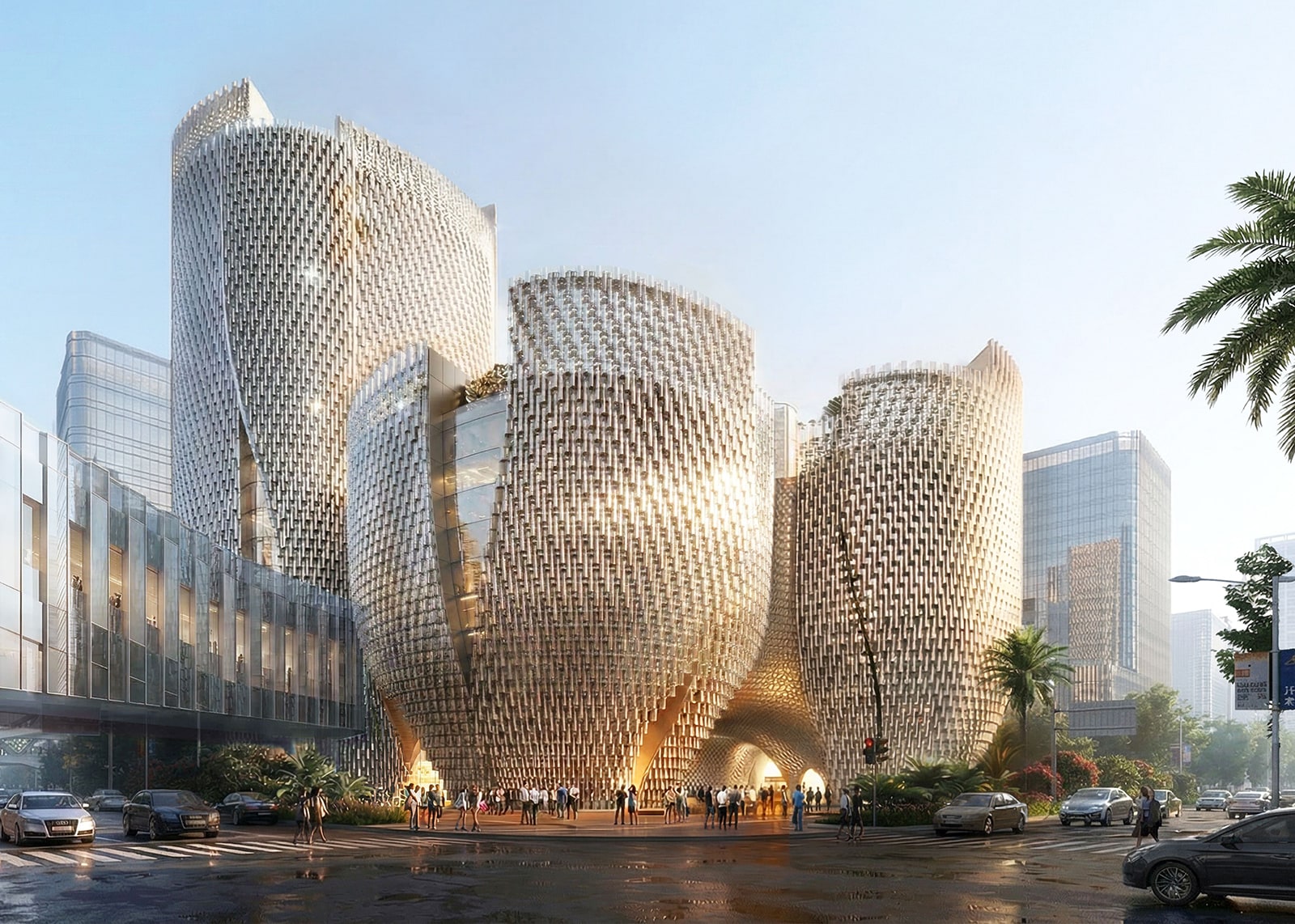
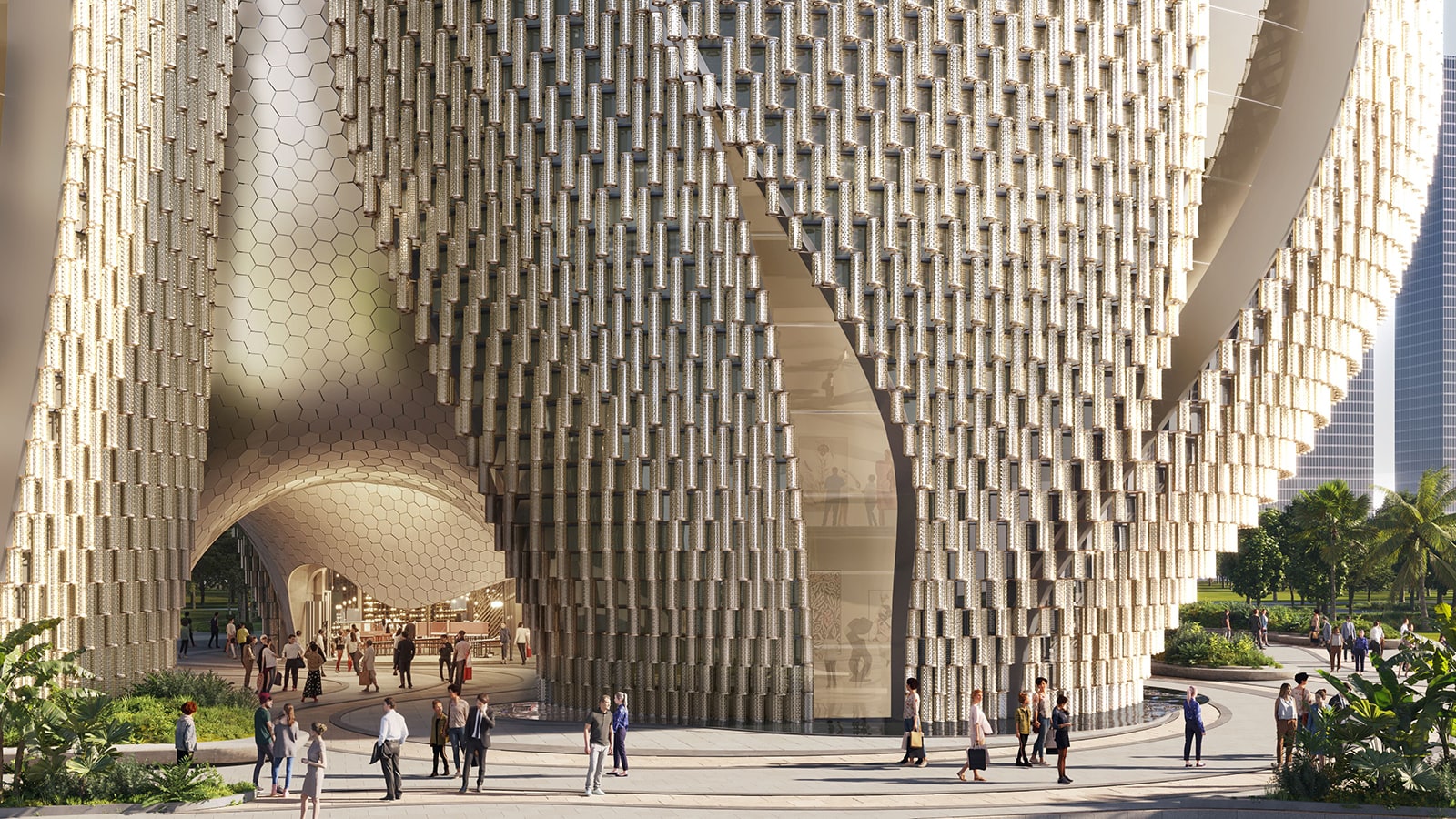
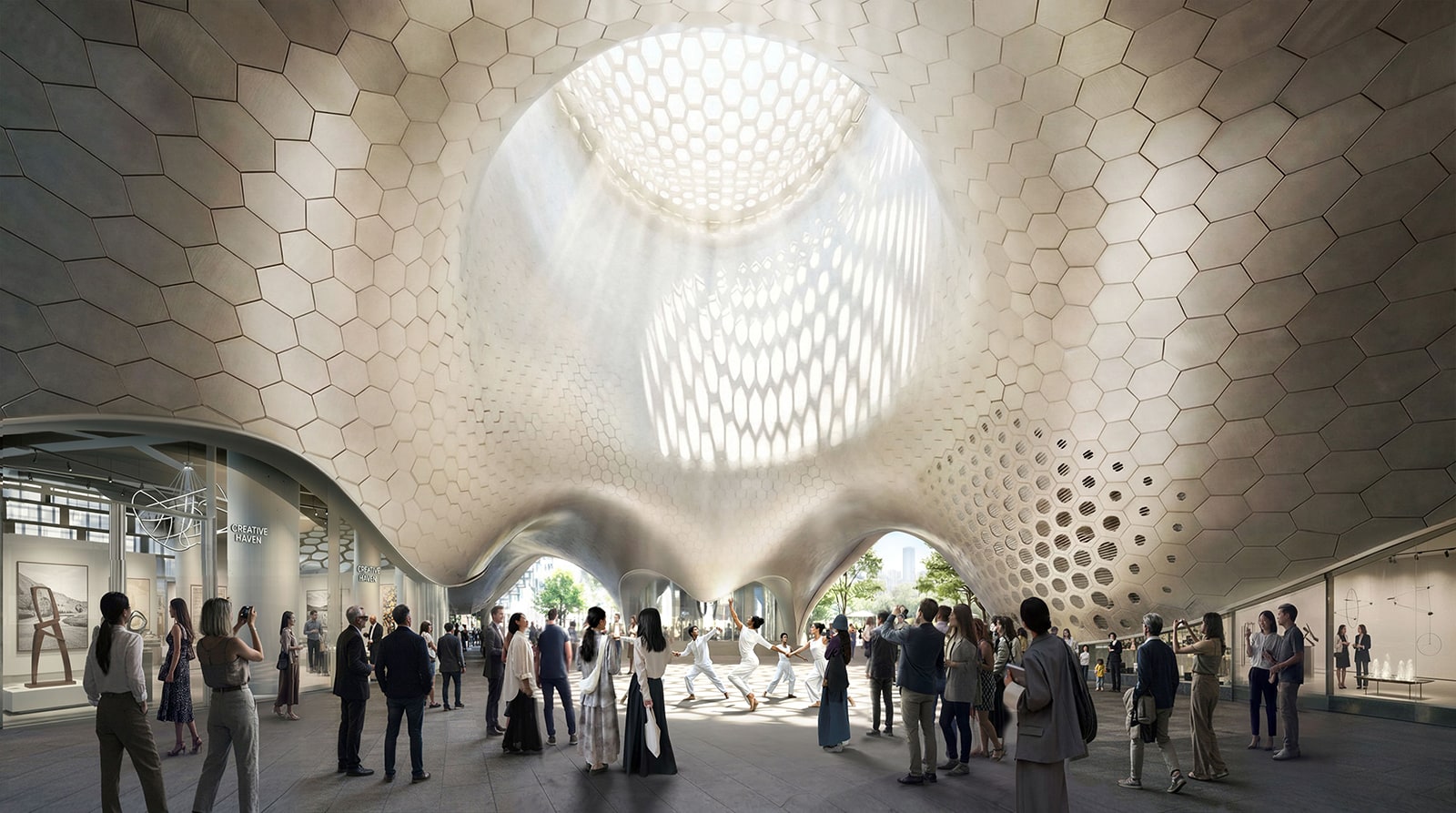
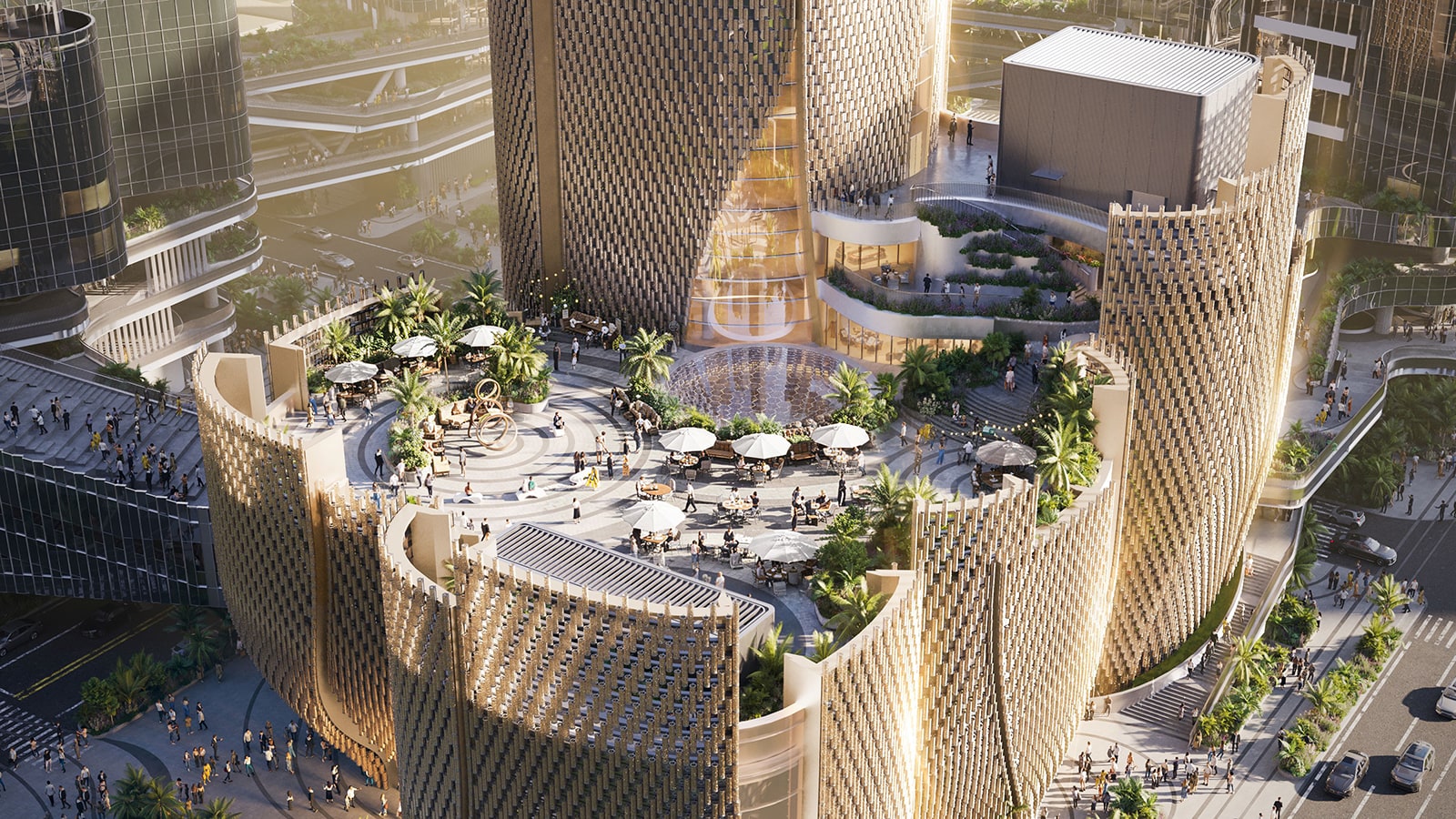
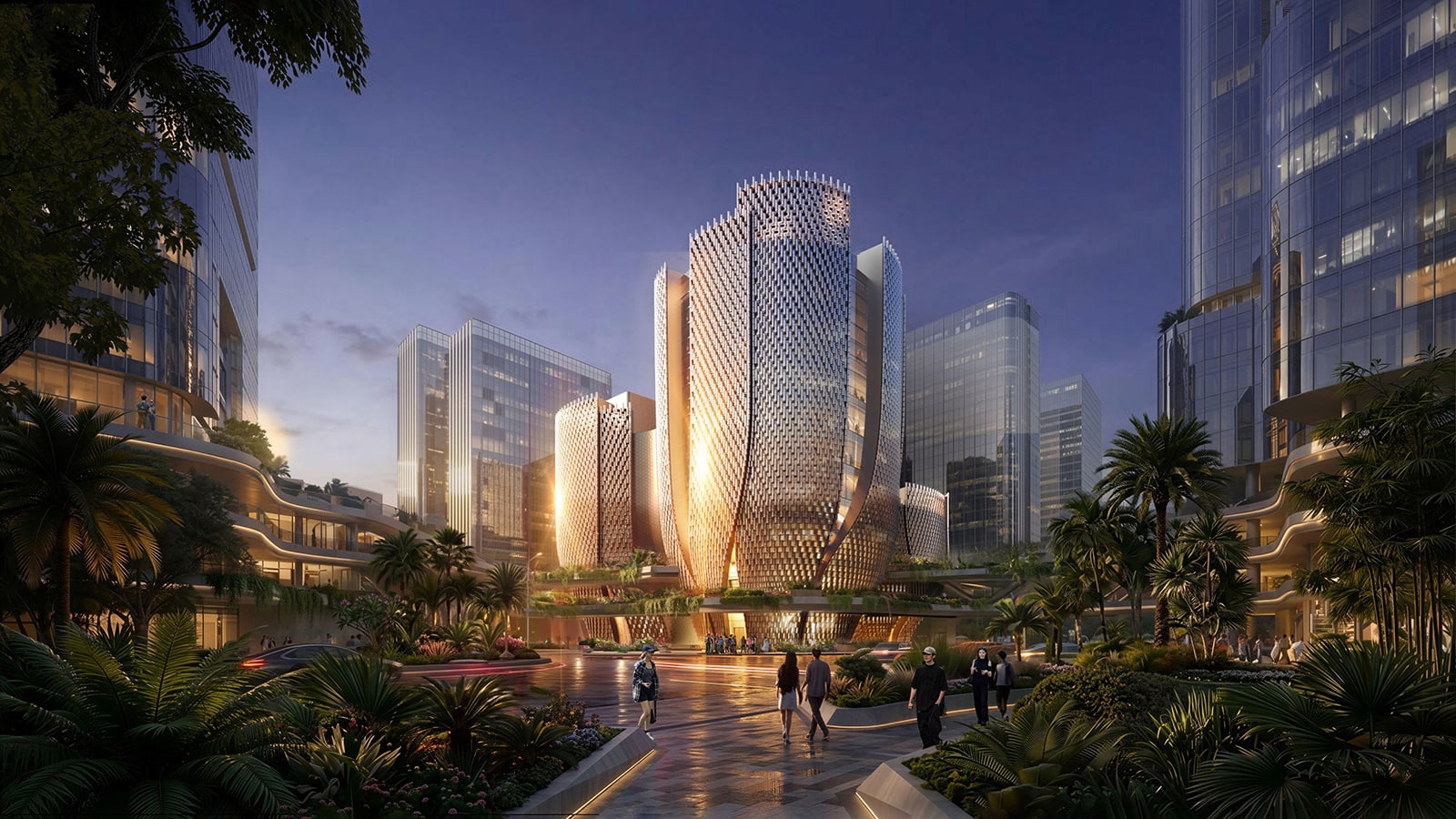
Architecturally, the Róng Museum of Art is designed to generate curiosity and invite movement and exchange between the museum, the Hybrid Campus and the surrounding city. The museum comprises a total of 4,500 square meters, with 2,300 square meters of gallery space, as well as extensive educational facilities, including a major public art library, workshops, spaces for lectures and screenings, culture- focused retail and cafes and restaurants. The exhibition spaces are lifted on five sculptural pavilions that touch the ground as slender structures and expand as they rise, forming a distinctive figure within the broader ensemble of Shenzhen’s towers. By suspending the building’s main body above the ground, Ole Scheeren’s design frees its base as a covered, naturally ventilated public plaza.
A grand skylight brings daylight into the sun and rain-protected space. Envisioned as an “art forum”, this organic space will be accessible 24 hours a day, allowing visitors and the public to pass through and gather. Artworks, temporary installations and public events will activate the space, turning casual movement through the site into a cultural encounter.
Floating above, the constellation of gallery volumes merges to form a flexible exhibition space – including an extensive double‑height gallery capable of hosting large‑scale installations. A meandering stair flows along the building’s outer facades to culminate in a rooftop garden. This open green space extends the Houhai Hybrid Campus’ central oasis into the museum itself and acts as an elevated exterior events platform, able to host shows, performances and outdoor programming with views across Shenzhen’s waterfront.
A Magical Silhouette
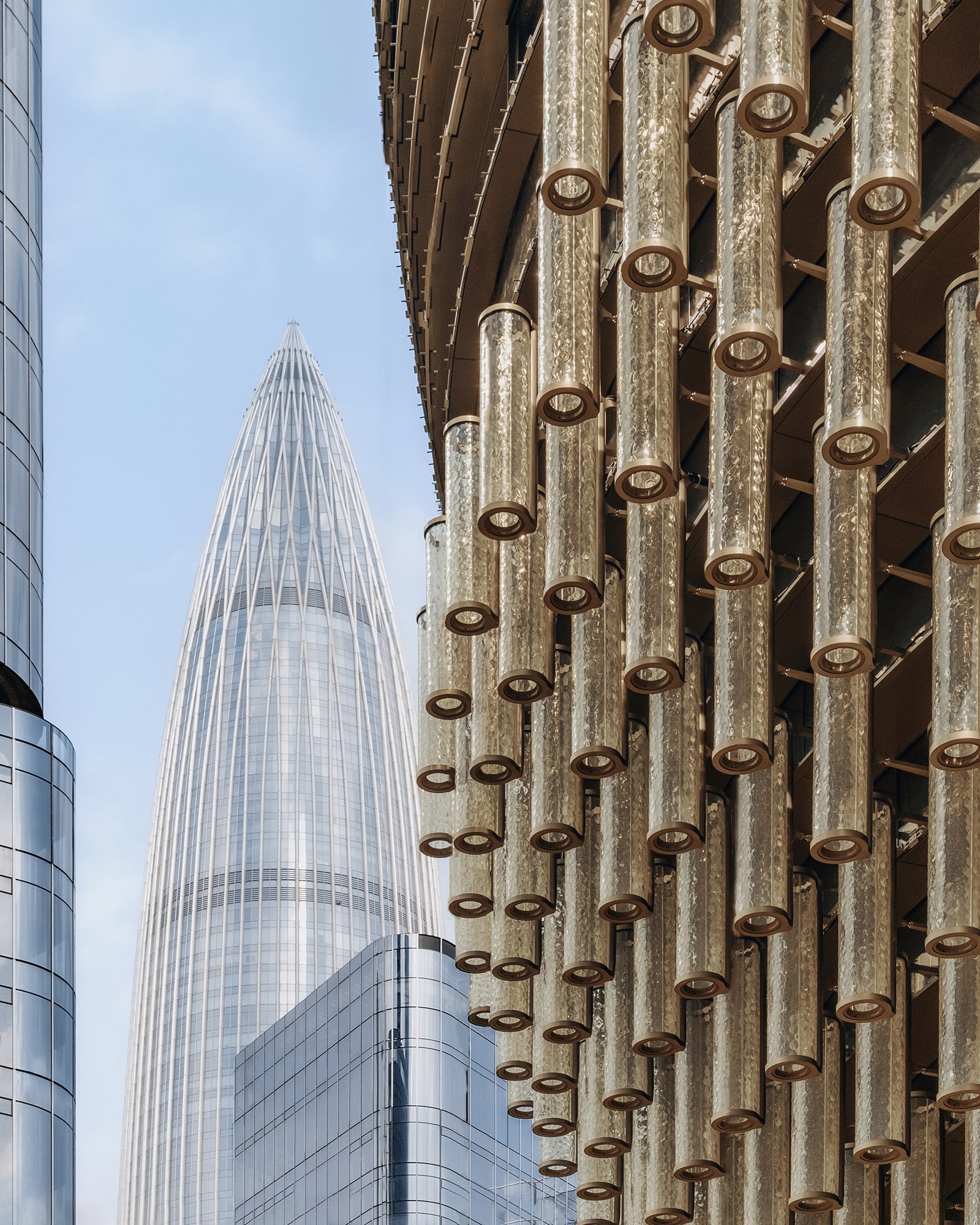
The museum’s façades consist of a system of horizontal layers that step backwards to form the organic cone shapes of the building. These are further enveloped by an outer layer of parametrically engineered suspended glass tubes that create a translucent veil around the volumes.
“I wanted to give the museum a distinctive and magical appearance that creates a sense of curiosity, especially amongst the younger generation. The whole project was conceived as a cross-cultural interactive experience, with a very focused exhibition space and programme at its core, but with many more ways to engage with culture and architecture,” says Ole Scheeren.
The glass tubes, in their materiality and effect, echo China’s historic application of glass – not as a means of transparency and uninterrupted views through a window, but as a filter of light imbued with color, texture and meaning. Their cumulative effect, adapted and optimized through today’s parametric technology, creates a dialogue between past and present, between culture and technology.
An Ecological Sculpture
Much like the foliage of a tree, the glass tubes provide shading, light diffusion and ventilation, significantly improving the energy performance of the building, while bringing diffused natural light to the interior spaces. The cone-shaped volumes collect rainwater on their roofs, which is filtered into retention ponds on the ground for recycling, contributing to Shenzhen’s broader ‘sponge city’ approach to water management..
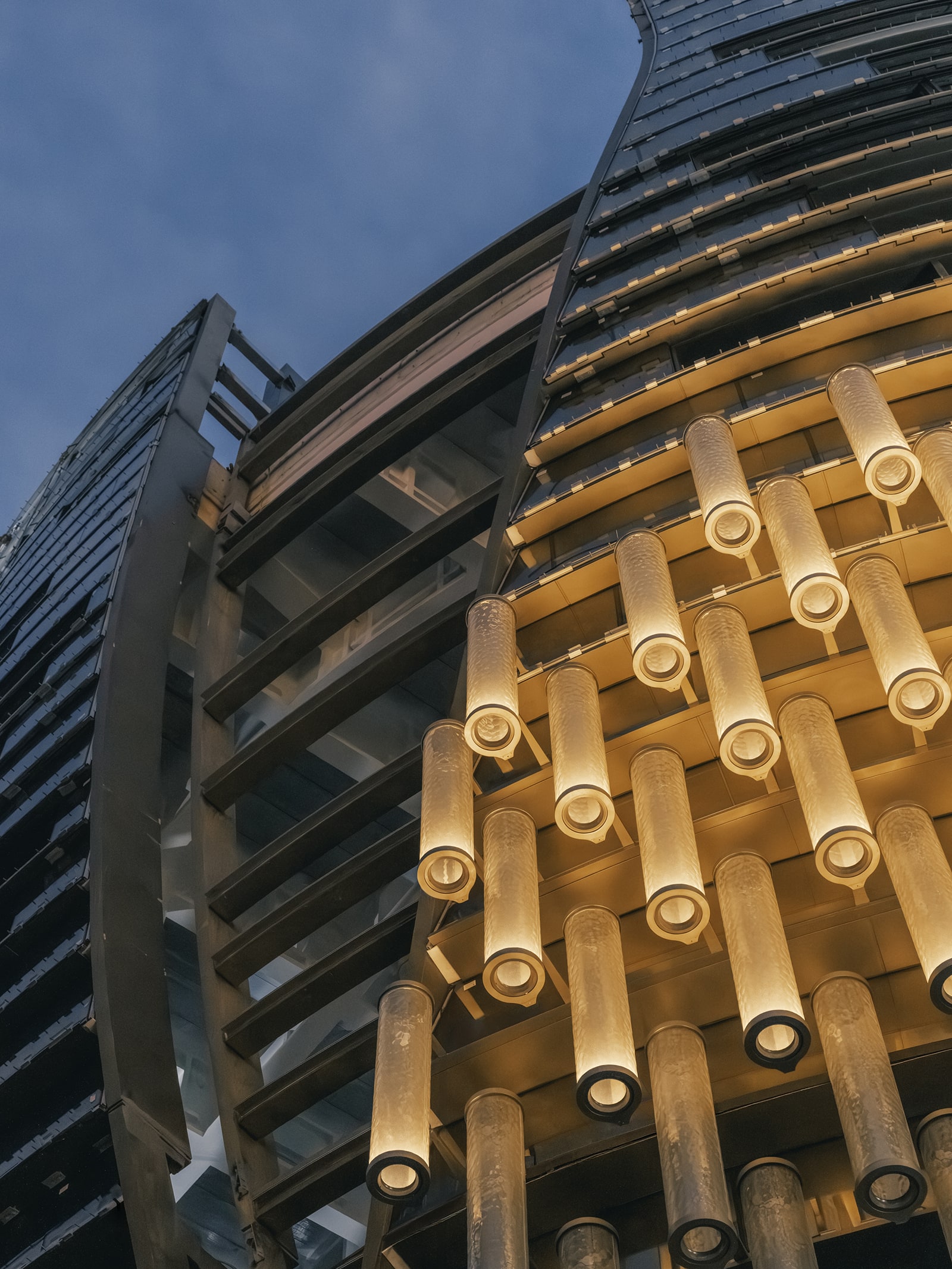
The textured glass tubes catch light by day and glow softly when illuminated at night. The result is a woven-like appearance with tactile depth and organic texture, creating a legible landmark within the dense Shenzhen skyline.
Each fritted glass tube can be illuminated individually, allowing for subtle variations and curated sequences of light across the museum’s envelope. After dark, the building evokes the character of a cultural lantern, its shifting glow acting as a radiant focal point that draws the city’s gaze and imagination.
Wired into Shenzhen’s Future
The Róng Museum of Art plugs directly into the extensive multi‑level circulation network that connects the Houhai Hybrid Campus with the wider city around. Elevated bridges link the museum to the other towers and to Shenzhen Talent Park at the bayfront, while a connection to the metro station is integrated into the development to bring visitors directly up into the cultural plaza from below.
Within its wider context, the Róng Museum of Art acts as a privately operated cultural anchor, ensuring that the city’s economic power is matched by an investment in memory, reflection and public cultural awareness, contributing to China’s cultural and urban future.
The Róng Museum of Art is currently under construction, with its opening to the public scheduled for 2027.
PRESS RELEASE: